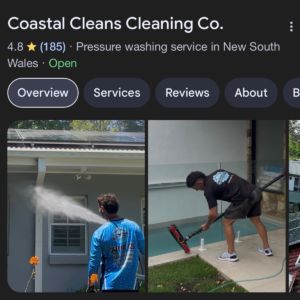
If a path, pool surround, driveway, or step feels slippery underfoot, it needs attention sooner rather than later. Algae and biofilm on hard surfaces are surprisingly dangerous — they can cause serious falls, and the problem tends to get worse the longer it’s left.
We provide slippery surface treatment across the Central Coast — cleaning the biological growth that causes the slip hazard and applying a biocide treatment that keeps surfaces safer for longer after we’ve finished.
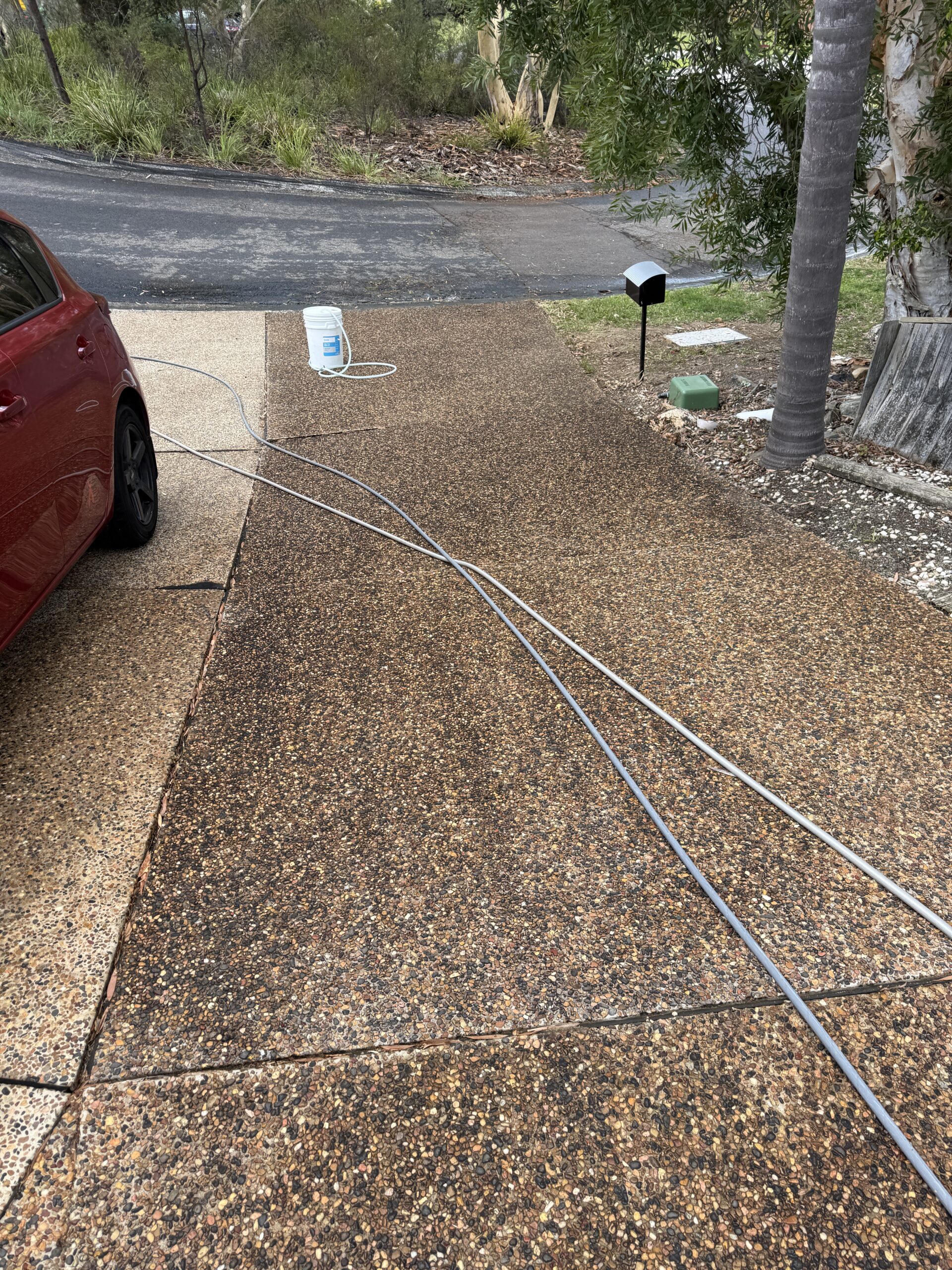
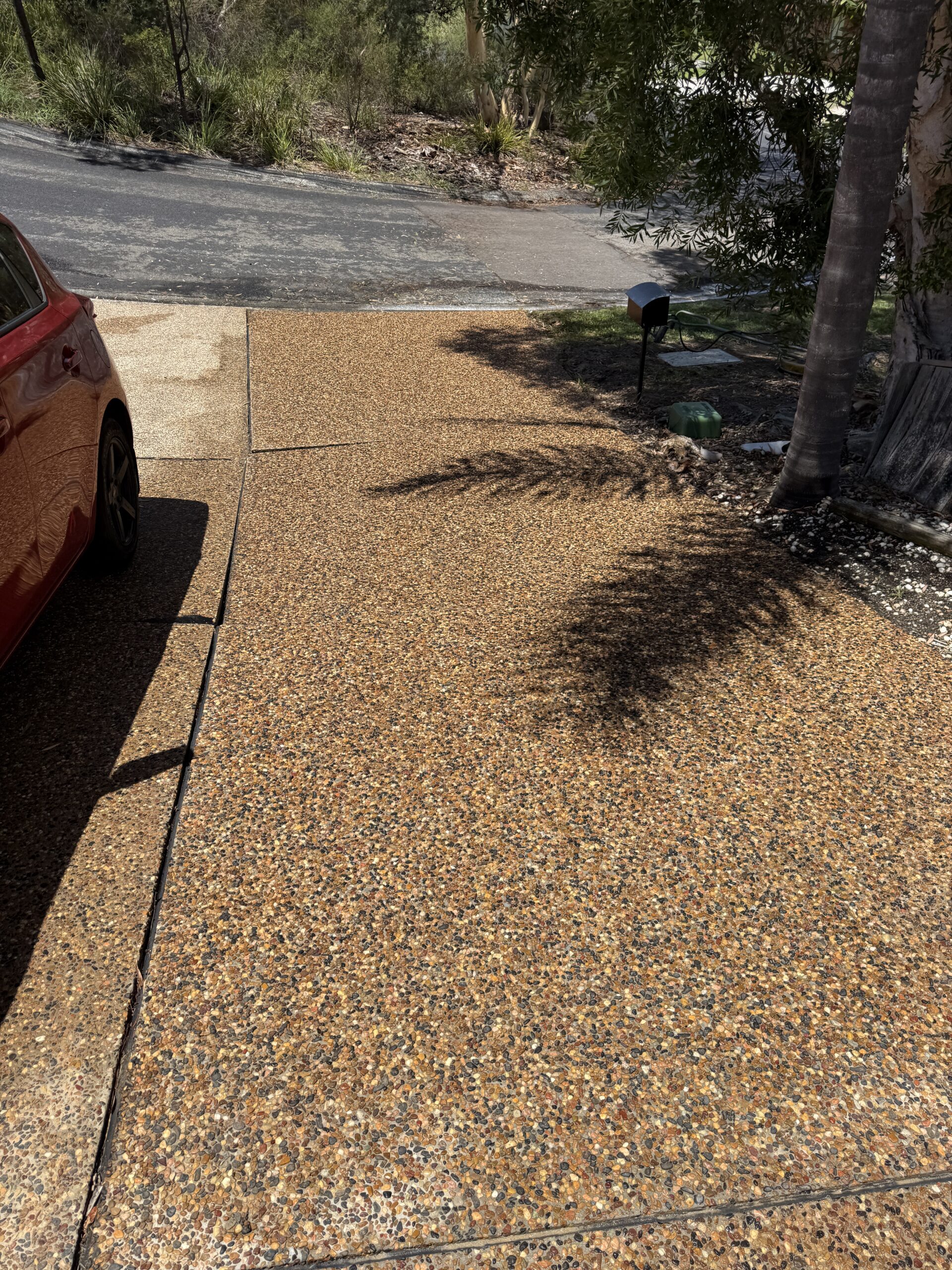
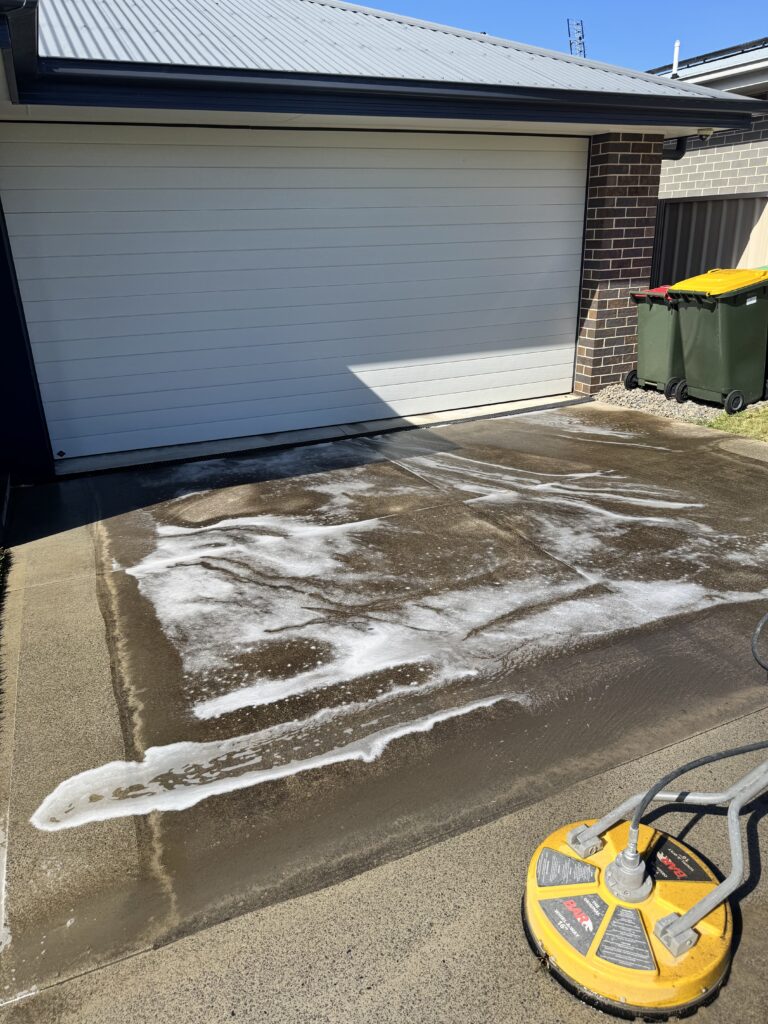
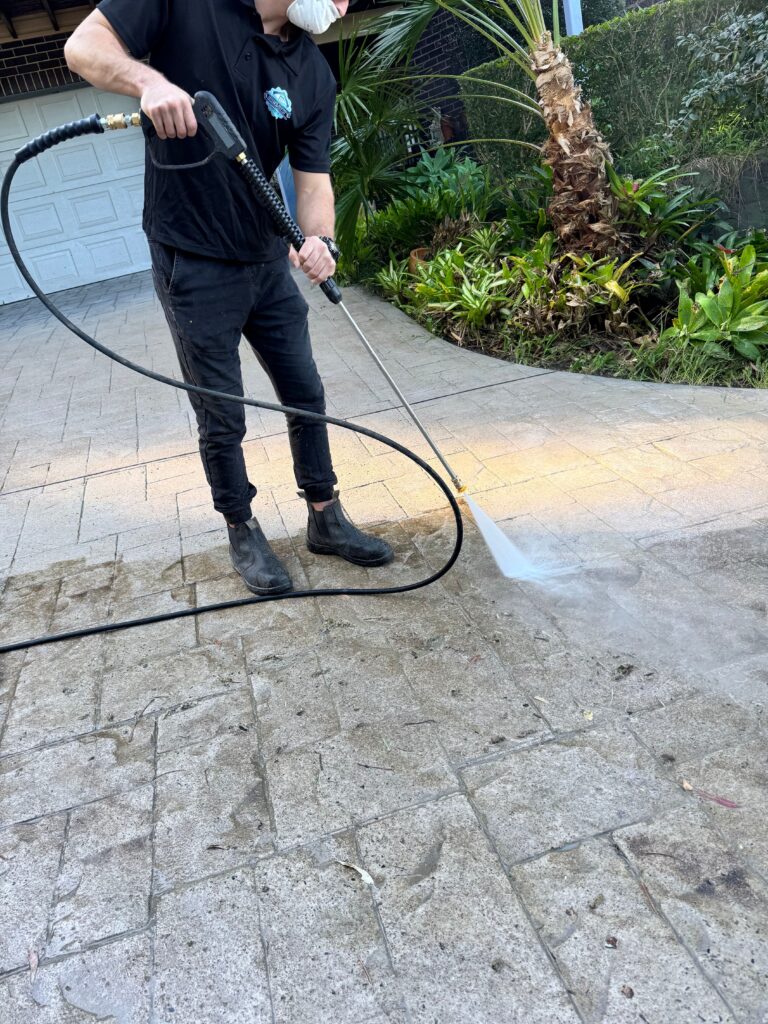
The slippery feeling underfoot on outdoor hard surfaces almost always comes from biological growth — algae, mould, biofilm, or lichen that has established itself on the surface. It’s invisible in dry conditions but becomes extremely slippery when wet, which is exactly when most people are using outdoor areas.
On the Central Coast the conditions for this kind of growth are almost ideal year round. Humidity, salt air, shade from trees and structures, and regular rainfall all contribute. Pool surrounds, shaded pathways, timber and composite decking, and south-facing paving are the surfaces we see it on most often.
The important thing to understand is that the slippery surface is a symptom. The cause is the biological growth underneath. Treating it properly means removing that growth and slowing its return — not just hosing the surface down.
This is a two-stage process and both stages matter.
The first stage is a thorough pressure clean to remove the visible algae, mould, and biofilm from the surface. This restores grip immediately and removes the bulk of the organic material.
The second stage is a Quat 50 biocide application. Quat 50 is a professional-grade quaternary ammonium compound that kills the remaining biological growth at a microbial level — the stuff that’s embedded in the pores of the surface and not fully removed by pressure washing alone. It continues working after we leave, significantly slowing the rate at which algae and mould re-establish on the surface.
The combination of both stages produces a result that lasts considerably longer than pressure washing alone. For surfaces in persistently damp or shaded conditions, this matters a lot.

Slippery surface treatment is relevant across a wide range of outdoor surfaces. The ones we treat most regularly on the Central Coast:
For business owners, strata managers, and body corporate committees, a slippery surface on a common area or publicly accessible part of the property isn’t just a safety concern — it’s a liability concern.
If someone slips and is injured on a surface that hasn’t been properly maintained, the consequences can go well beyond the injury itself. Regular slippery surface treatment is a straightforward and affordable way to demonstrate that the property is being maintained to a reasonable standard.
We provide documentation of work completed for commercial and strata clients, including before-and-after photos and service records. This is useful to have on file if the maintenance history of the property is ever called into question.


This depends on the surface, the environment, and how much shade and moisture the area gets. In open sunny areas the treatment lasts longer — sometimes well over a year. In persistently shaded or damp conditions, biological growth will return faster and more frequent treatment may be needed.
We give honest advice on expected intervals based on the specific conditions of your property. For commercial properties and strata common areas we can set up a scheduled maintenance programme so the surfaces stay on top of it year round.
We carry out slippery surface treatment throughout the Central Coast region including:
Terrigal, Avoca Beach, Wamberal, MacMasters Beach, Gosford, Point Clare, Erina, Springfield, Kincumber, Saratoga, Ettalong Beach, Umina Beach, Woy Woy, Tuggerah, Wyong, Hamlyn Terrace, Lake Haven, Toukley, The Entrance, Bateau Bay, Shelly Beach, and surrounding areas.
Not on the list? Get in touch — we cover more of the Coast than most.
Pricing depends on the size of the area, the surface type, and whether it’s a standalone treatment or combined with a broader pressure cleaning job. Most residential slippery surface treatments come in between $200 and $400.
For commercial and strata properties, pricing is based on a site assessment. Bundling slippery surface treatment with a scheduled pressure cleaning service is the most cost-effective approach for properties that need both.
We always quote upfront — no changes on the day.
It will improve grip immediately by removing the visible algae and biofilm. But without a biocide treatment afterward, the biological growth will return relatively quickly — particularly in shaded or damp conditions. The two-stage process gives a result that lasts significantly longer.
The pressure cleaned surface is safe to walk on once it's dry — usually within 30 to 60 minutes depending on conditions. The Quat 50 biocide needs to dry fully before the surface is used, which typically takes a similar amount of time. We'll confirm on the day based on the weather.
Yes, once the treated surface has dried. Quat 50 is widely used in commercial and residential settings and is safe for general use after application and drying. We'll let you know when it's safe to use the area again before we leave.
In most cases, yes. Pool surrounds are one of the most common slippery surface jobs we do. The constant moisture creates ideal conditions for algae and biofilm. A pressure clean followed by Quat 50 treatment makes a substantial difference to grip, and the biocide slows the regrowth significantly. Properties with pools in heavy shade may need treatment every six to twelve months to stay on top of it.
Yes, and this is an area where we'd recommend documenting the work for liability purposes. We provide before-and-after photos and job records for all commercial and strata slippery surface treatment work as standard.
Get in touch with Coastal Cleans Cleaning Co. for a free quote on slippery surface treatment anywhere on the Central Coast. We usually respond same day.